Un micro de studio que tu peux ouvrir, comprendre et réparer.
Le Talas One est un micro à condensateur à large membrane. Sa capsule à deux membranes sort sur deux canaux séparés, son électronique tient sur deux cartes, et tous ses plans sont publiés. Le prototype fonctionne : écoute-le.
En juin 2026, le P1 et un RØDE NT1-A ont capté la même source au même moment, dans une pièce non traitée : du bruit rose, rejoué sur une enceinte. Les niveaux ont été égalisés après coup, à 0,3 dB près.
0:00
Passe de A à B pendant la lecture : la position est conservée. Au casque, la différence s’entend mieux.
Bruit rose — Talas One P1Bruit rose — RØDE NT1-A
Ce qu’on y entend
Le P1 sonne plus chaud et plus sombre que le NT1-A : les bas-médiums sont plus présents, les aigus au-dessus de 10 kHz plus doux. Les mesures disent la même chose, avec quatre méthodes différentes. C’est une question de caractère, pas de classement.
Pas de musique ici : une paire d’extraits musicaux existait, mais la musique jouée par l’enceinte n’était pas celle du projet. Elle a été retirée. Prochaines écoutes : des voix et des instruments, enregistrés avec la P3.
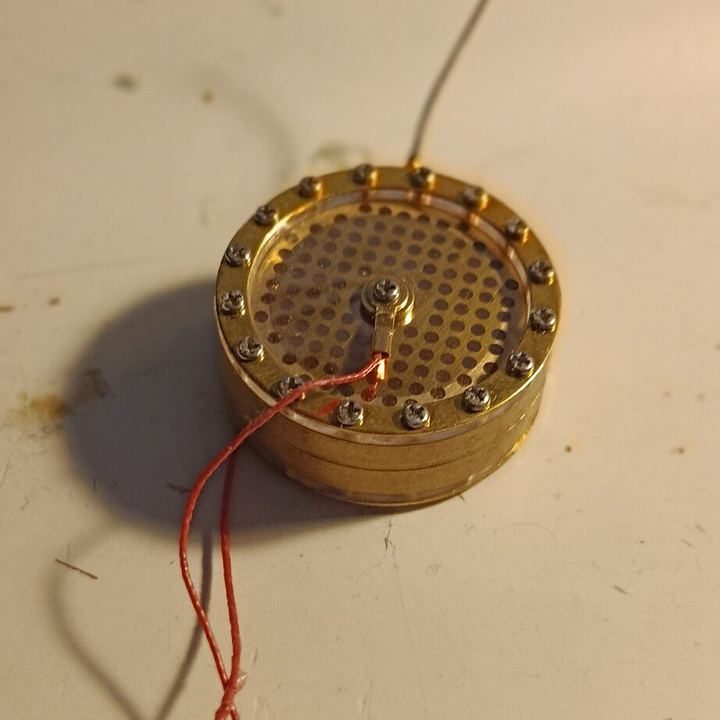
La capsule porte deux membranes, et chacune a sa propre sortie symétrique. Tu enregistres les deux sur deux pistes, puis tu choisis leur mélange au mixage au lieu de le figer à la prise.
L’objectif : régler la directivité après coup. C’est ce que la P3 doit démontrer avec ses deux canaux ; le P1 n’en fait fonctionner qu’un.
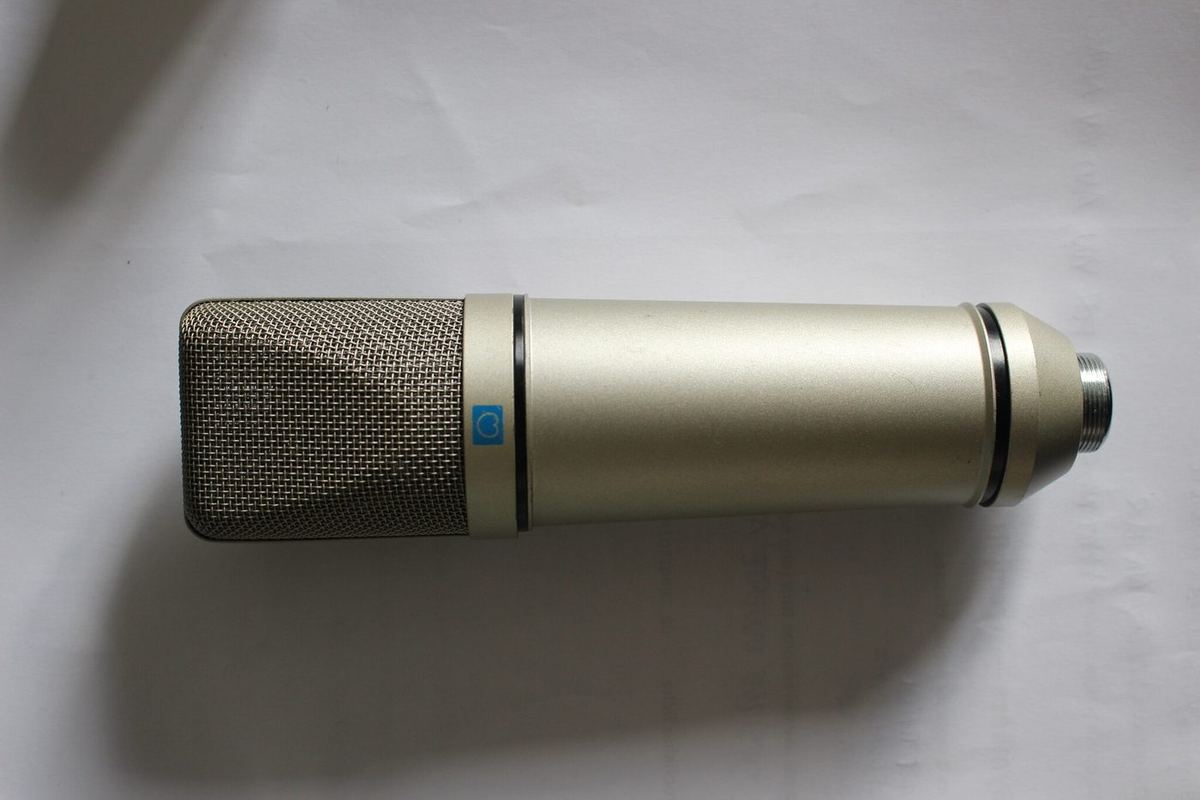
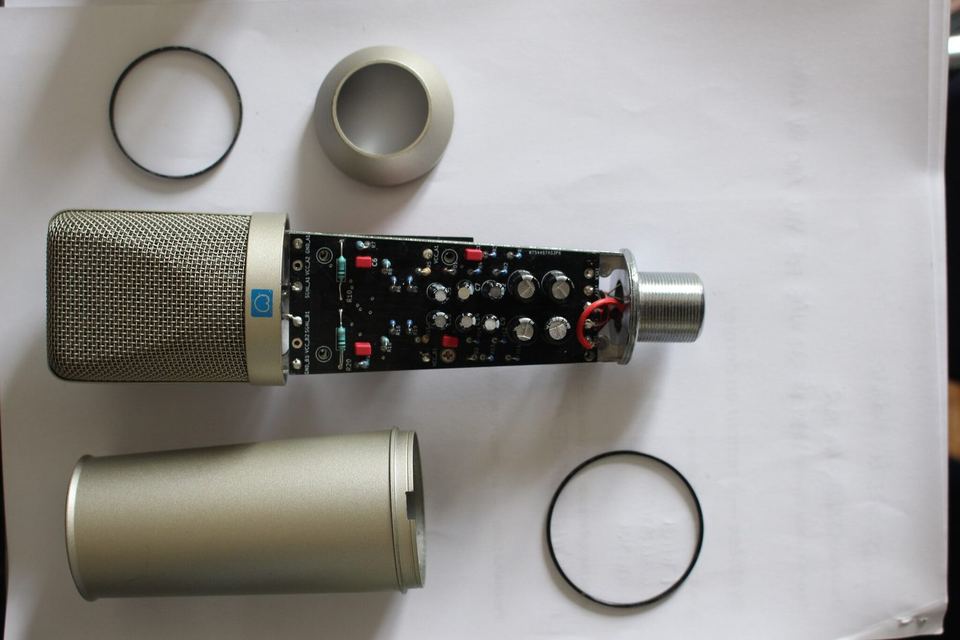
Le P1 démonté : grille, tube, bagues et électronique.
Deux cartes, un corps qui s’ouvre
Le préampli (OPA1642) et l’alimentation de la capsule sont sur deux cartes séparées : tu peux remplacer l’une sans toucher à l’autre. Le corps se démonte en quelques pièces et laisse l’électronique accessible.
Chaque composant de la P3 a sa référence fournisseur dans la nomenclature, et un guide de dépannage accompagne les plans.
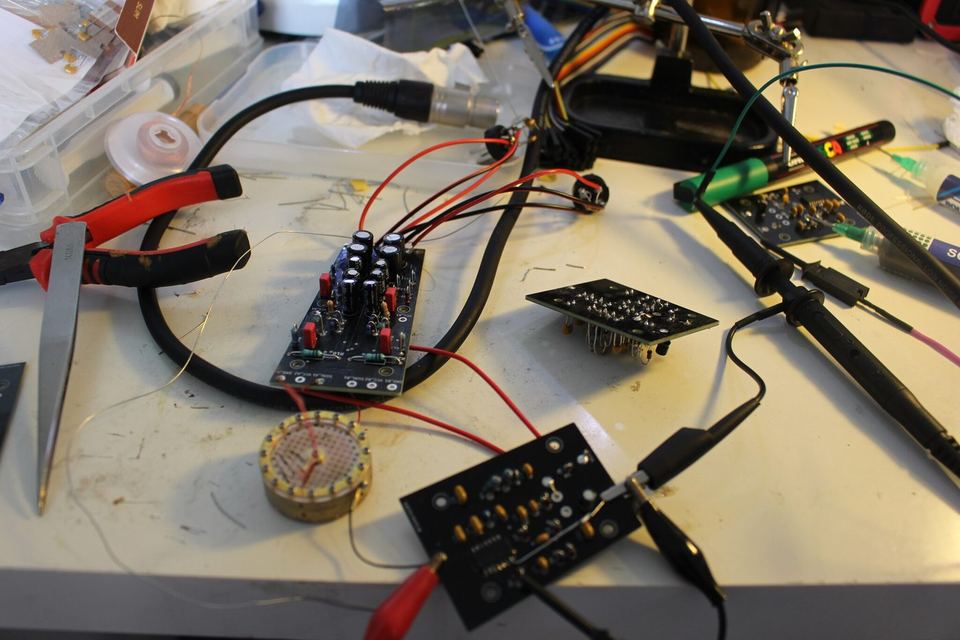
L’établi pendant les essais du P1.
Tout est ouvert, jusqu’au banc de mesure
Schémas et cartes KiCad, Gerbers de la P3, nomenclatures, simulations et guides d’assemblage sont publiés. Matériel, documentation et photos sous CC BY-SA 4.0. Le circuit, préampli et alimentation de polarisation, est celui que Jules Ryckebusch (DJJules) a publié en 2021 (« True Condenser OPA Mics », cartes partagées sous CC BY-SA 3.0). Les cartes, les mesures et la documentation sont le travail de Talas.
Les mesures sortent de mic-test-bench, un banc libre que tu peux faire tourner sur tes propres micros, ou essayer sans matériel grâce à une campagne synthétique.
Utilisation
Ce qu’il te faut pour l’utiliser
Interface audio
Deux entrées micro avec alimentation fantôme 48 V, une par canal. Une seule entrée suffit pour enregistrer un canal.
Câble
Un câble en Y, XLR 5 broches vers deux XLR 3 broches : le micro sort sur un XLR 5 broches, que les interfaces n’ont pas.
Alimentation
Le fantôme 48 V de l’interface. Rien d’autre à brancher.
Pour le construire
De 69 à 76 € de pièces à l’unité, dont 21 € d’électronique, plus le câble en Y, de quoi souder et un peu d’expérience en électronique. Guide d’assemblage.
Le contenu d’un éventuel micro vendu, câble et accessoires compris, sera fixé avec la première série.
Avancement
Où en est le projet
État au .
Prototype P1 mesuré
Assemblé en avril, corrigé à la main, mesuré en juin face à un NT1-A sur son canal B.
Sensibilité comparable à celle du NT1-A
Signature plus chaude et plus sombre
Phase propre, pas d’écrêtage jusqu’à −1 dBFS
Un résidu de distorsion vers 500 Hz, en cours de localisation
Révision P3 commandée
Toutes les corrections du P1 sont intégrées aux sources.
DRC et ERC à zéro sur les deux cartes
Schémas et cartes identiques, netlists comparées
Simulée sous ngspice
Cartes commandées le 4 octobre, cinq de chaque
Prochaine étape
Assembler la P3 visé
Recevoir les cartes, les assembler, valider les deux canaux, puis enregistrer des voix et des instruments.
À mesurer ensuite : bruit propre, réponse absolue, SPL maximal, directivité
Un courriel quand une étape est franchie : la P3 fabriquée, les premières prises de voix, l’ouverture d’une éventuelle première série.
Rien n’est en vente aujourd’hui, et l’inscription n’engage à rien.
Prix visé pour une éventuelle première série : 150 €.
Les hypothèses derrière ce prix
150 € est une cible, pas une offre : rien n’est vendu, précommandé ni payé aujourd’hui.
Les pièces d’un micro complet construit soi-même reviennent à 69 à 76 € à l’unité, dont 21 € d’électronique et 26 € pour la capsule ; le reste correspond aux cartes, au corps et au connecteur XLR. Le câble en Y est en plus. C’est une fourchette parce que le corps n’a pas encore été chiffré par un fabricant ; le détail poste par poste dit ce qui est relevé et ce qui est estimé.
Une série suppose trois choses : une P3 fabriquée et mesurée, un corps dédié, un atelier immatriculé. Le contenu de la boîte, la garantie et les délais seront fixés à ce moment-là.